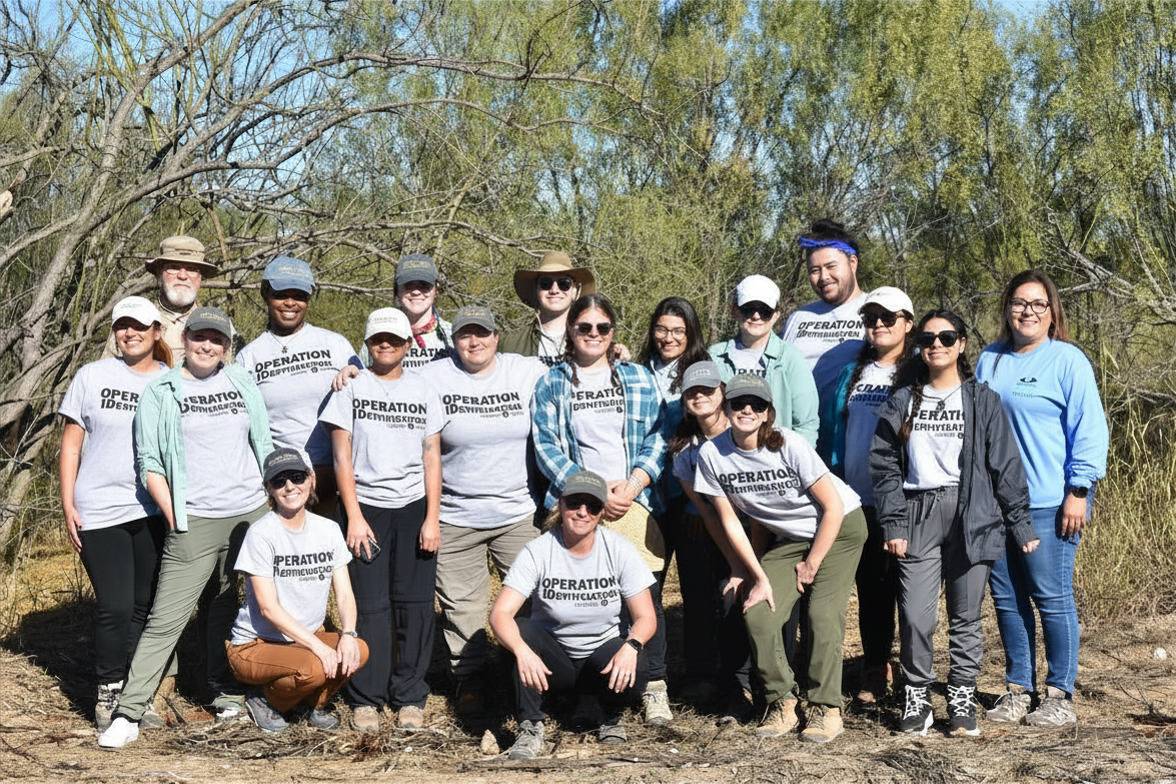


Meet the team behind OpID
Background

In Texas, deaths fall under the jurisdiction of a Justice of the Peace (JP), and not all unidentified deaths are sent to a medical examiner’s office. When any individual dies and the circumstances surrounding death are unknown, the Texas Code of Criminal Procedures requires a forensic examination, collection of DNA samples, and submission of information to unidentified and missing persons databases. However, due to lacking resources, funding, and capacity, many counties are unable to follow these laws and have historically buried the unidentified without proper investigation, especially when facing high death tolls, such as along the southern border.
To help mitigate the challenges faced by Texas counties that lack access to a medical examiner, OpID was founded in 2013 by Dr. Kate Spradley as part of the Forensic Anthropology Center at Texas State (FACTS). By working closely with county officials as well as international governmental and nongovernmental partners, OpID conducts forensic anthropological analysis, DNA submission, and case management services in an effort to facilitate identifications and provide answers to families.
In addition to receiving cases transferred directly from counties, OpID carries out cemetery surveys and forensic excavations of the long-term unidentified throughout the Texas border. In recent years, our work has expanded to include fingerprinting services as well as training and outreach to law enforcement, county officials, practitioners, and others tasked with managing deaths in Texas and around the country. OpID especially seeks to train TXST undergraduate and graduate students as the next generation of forensic anthropologists, who are invaluable to the project and play a big role in helping families learn the fate of their loved ones.
723
Total cases received
421
Open cases
289
Positive identifications
18
Counties served
Our Team